THE WIRE · № 66323
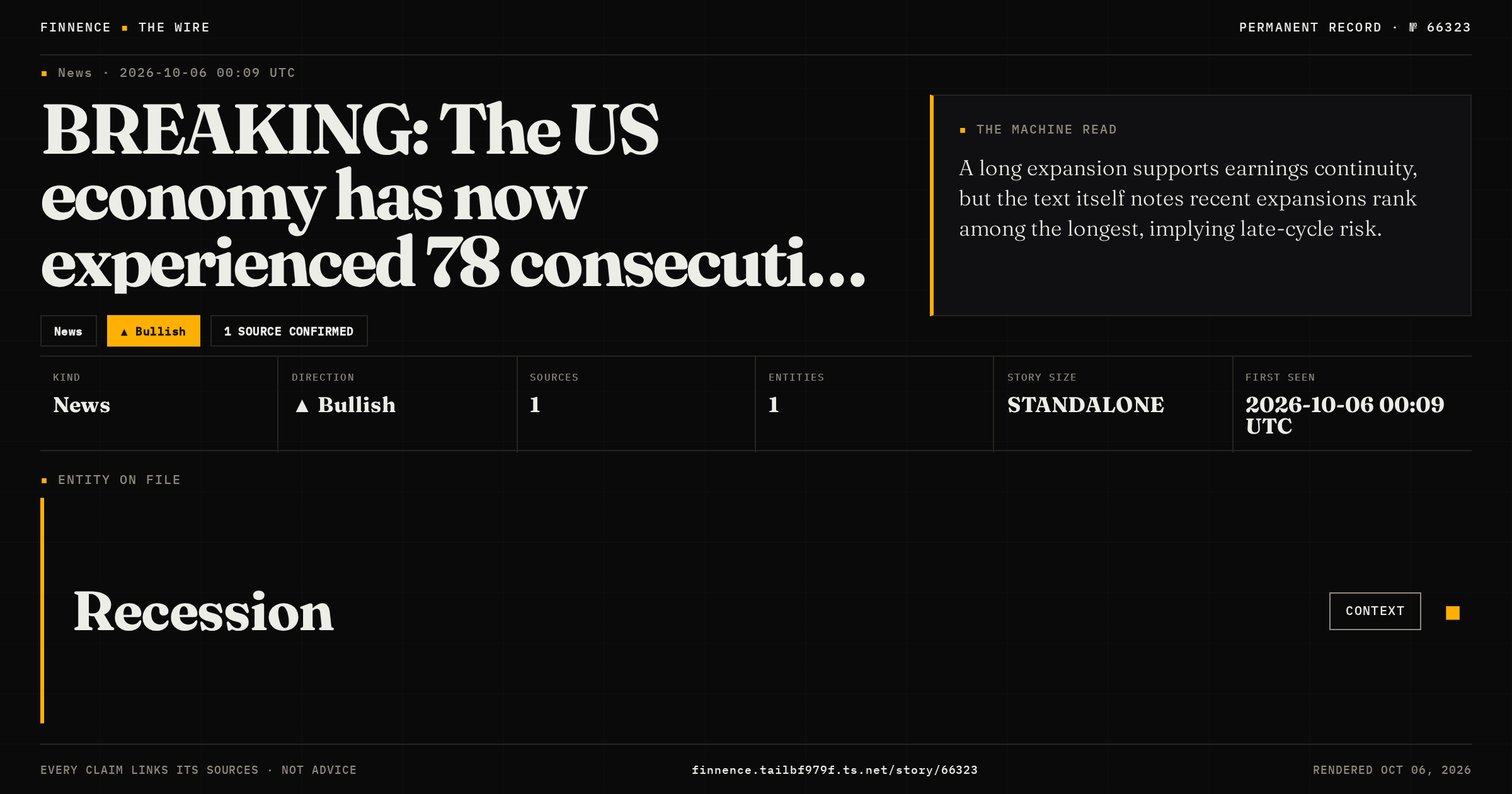
BREAKING: The US economy has now experienced 78 consecutive months of expansion, the 6th-longest business cycle since 1854. This is well above the long-term average of ~49 months and the median of ~38 months. By comparison, the longest period without a recession was between 200
01 THE MACHINE READ
WHY IT MATTERS.
A long expansion supports earnings continuity, but the text itself notes recent expansions rank among the longest, implying late-cycle risk.
Expansion is long but aging; cycle risk builds
Next recession-signal data release
Late-cycle complacency before a downturn
FULL DISPATCH
BREAKING: The US economy has now experienced 78 consecutive months of expansion, the 6th-longest business cycle since 1854. This is well above the long-term average of ~49 months and the median of ~38 months. By comparison, the longest period without a recession was between 2009 and 2020, at 128 months. All 5 of the most recent US expansions rank among the 7 longest economic growth periods since business cycle dating began in 1854. Unconventional monetary policy, historically large budget deficits, alongside the AI investment boom, appear to be extending the duration of business cycles. The data says the US economy is remarkably strong.
02 THE STORY SO FAR
THE RECORD, IN ORDER.
STANDALONE ITEM — NOT YET FOLDED INTO A DEVELOPING STORY.
03 WHO'S INVOLVED
ENTITIES ON FILE.
04 RECEIPTS
THE SOURCE RECORD.
1 SOURCES CONFIRMED05 PROPAGATION
WHAT THIS TOUCHES.
Manufacturing conditions deteriorate as September PMI falls to 49.62026-10-04 23:21 UTC
BREAKING: U.S. ISM PMI for services comes in below expectations🚨2026-10-05 14:21 UTC
KEEP READING THE MACHINE
Summaries are generated and may contain errors — every claim links its sources.